
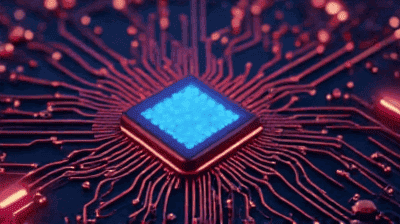
Imagine a world where your smartphone continues to function perfectly even after suffering from minor damages. What if your gadgets could repair themselves automatically, just like human skin heals from cuts and abrasions? This vision is becoming a reality through the development of self-healing electronics. As technology continues to advance at a rapid pace, research in materials science has led to the creation of circuits that can mend themselves after being damaged.

The dream of hypersonic flight, defined as traveling at speeds greater than Mach 5 (about 3,800 miles per hour or 6,100 kilometers per hour), has captured the imagination of engineers, scientists, and the public alike. The ambition to break barriers in air travel not only promises significantly reduced travel times across the globe but also opens avenues for revolutionary advancements in military and space applications. However, achieving hypersonic speeds presents formidable engineering challenges, particu
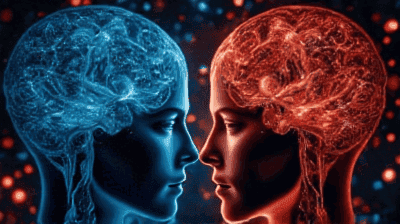
Artificial intelligence represents one of the most exciting frontiers of science and technology today. As researchers and engineers develop increasingly sophisticated neural networks, a compelling question arises: How closely do these artificial systems mirror the workings of the human brain?
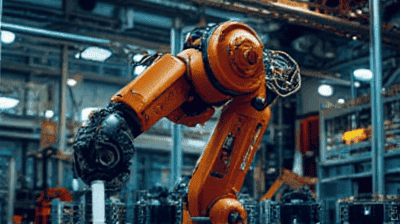
In the realm of modern manufacturing, industrial robots have become essential components on the factory floor, driving efficiency, productivity, and precision. As technology continues to advance at an extraordinary pace, these machines are not only evolving in terms of their capabilities but also becoming remarkably smarter. The integration of artificial intelligence, machine learning, and advanced sensors is revolutionizing the way industrial robots operate, opening doors to a new era in manufacturing.
In recent years, large language models (LLMs) like ChatGPT have transformed the field of artificial intelligence, revolutionizing the way we interact with technology. These models are capable of generating human-like text, answering questions, assisting with creative writing, and even engaging in meaningful conversations. But how do these sophisticated systems actually work?